

Parts 20 and 21 of our hands-on RAG Systems course are now available.
A RAG system can return results in milliseconds and still fail at two separate layers.
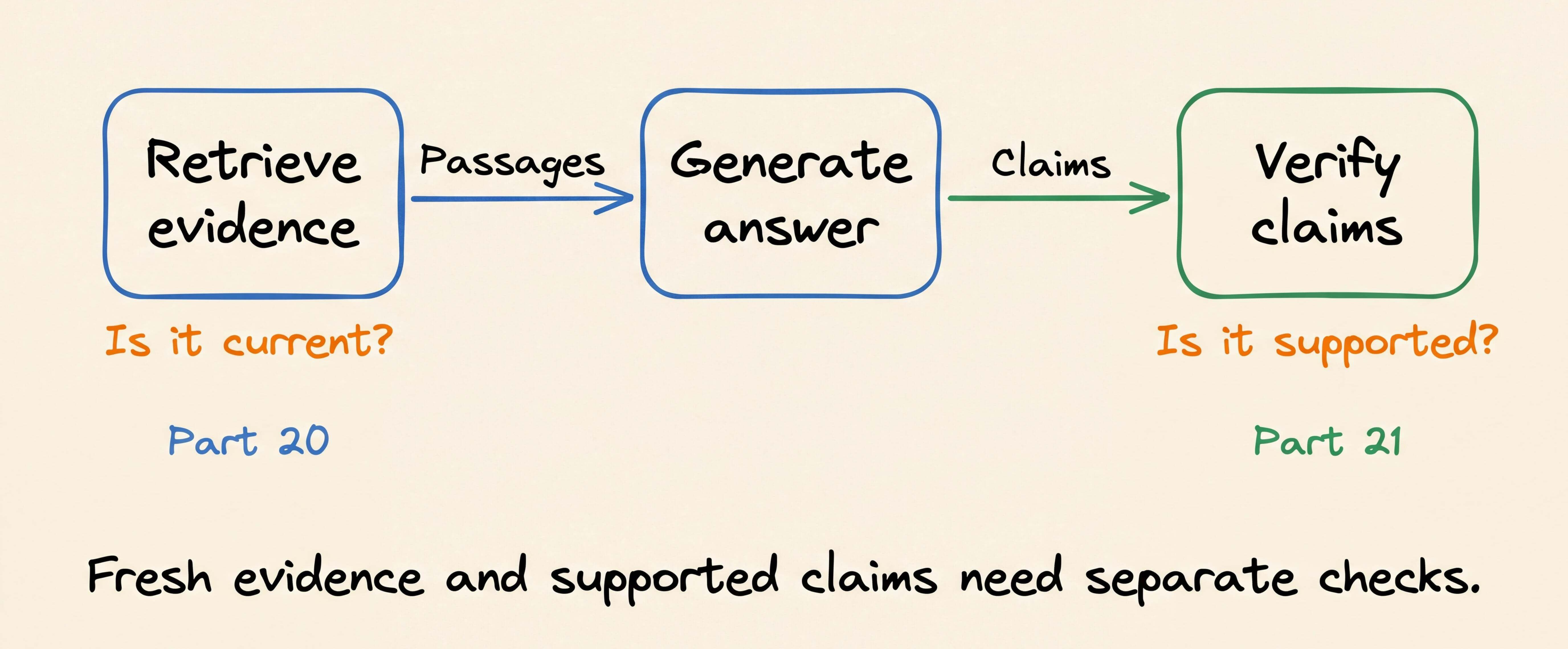
Part 20 covers the evidence entering the system: document revisions, mixed embedding spaces, stale chunks, targeted evaluations, and safe index migrations.
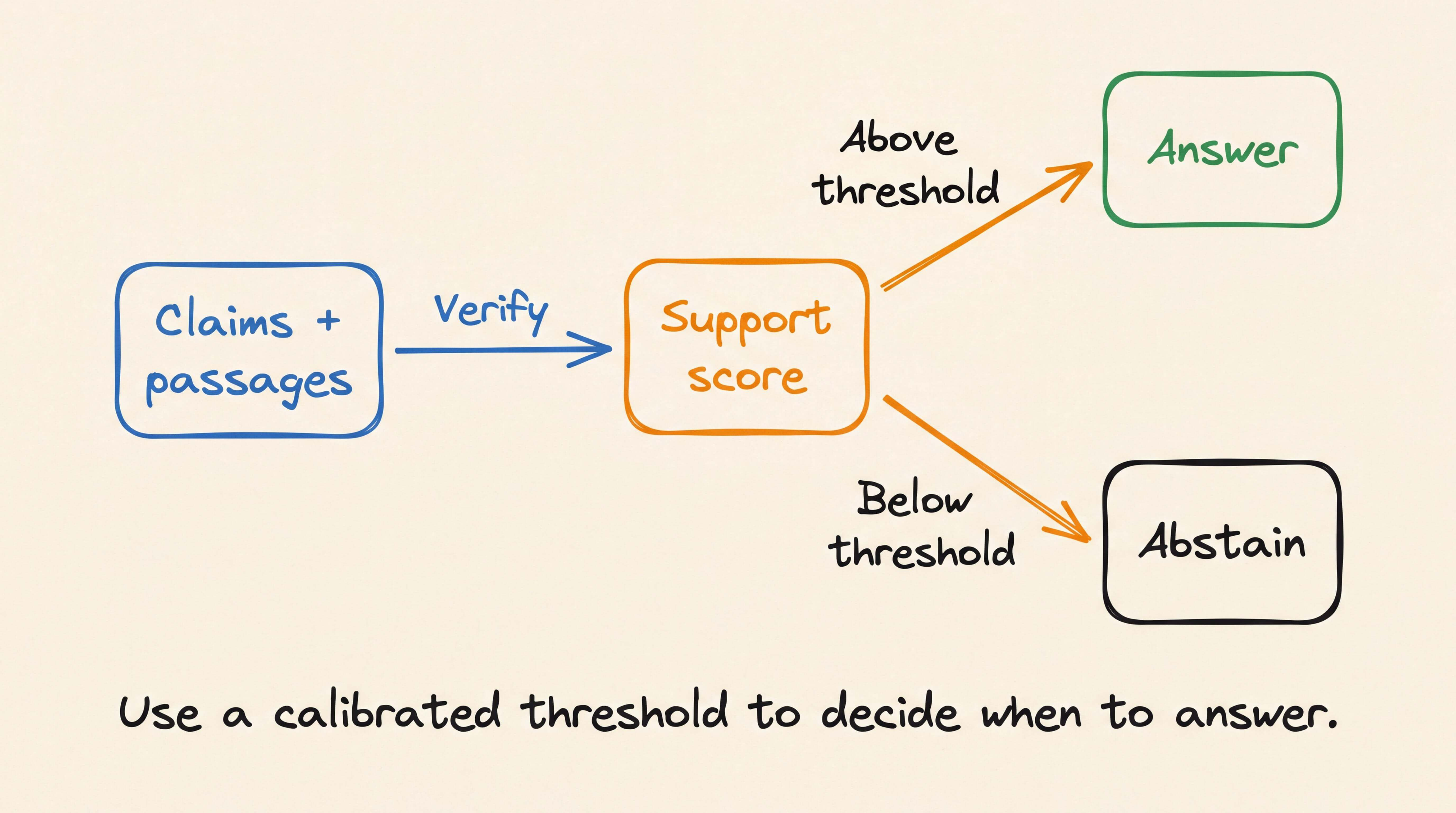
Part 21 covers the claims leaving it: query-time verification, claim-level support scores, calibrated abstention thresholds, and the cost of running a verifier on every answer.
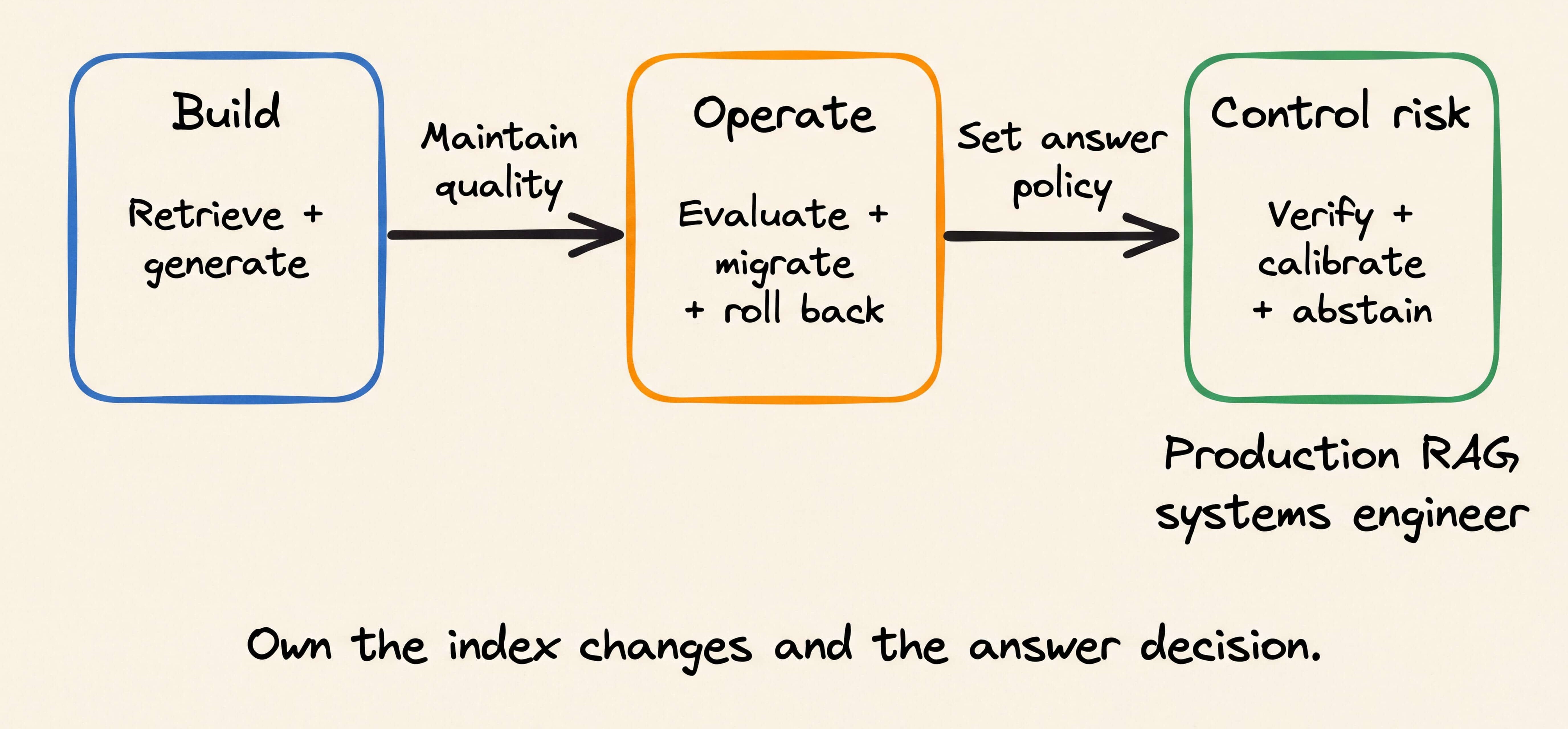
Together, they connect index operations with answer-level risk control.
Why care?
Connecting a retriever to an LLM is enough to build the first version of a RAG application.
Owning that system after launch requires a different set of skills. Documents change, embedding models get replaced, evaluation data becomes stale, and generated answers can remain unsupported even when retrieval succeeds.
An AI engineer responsible for this system must locate the failure before changing the pipeline. A quality drop may come from an outdated document, a mixed embedding index, a query distribution shift, a retrieval miss, or a generator that made an unsupported claim.
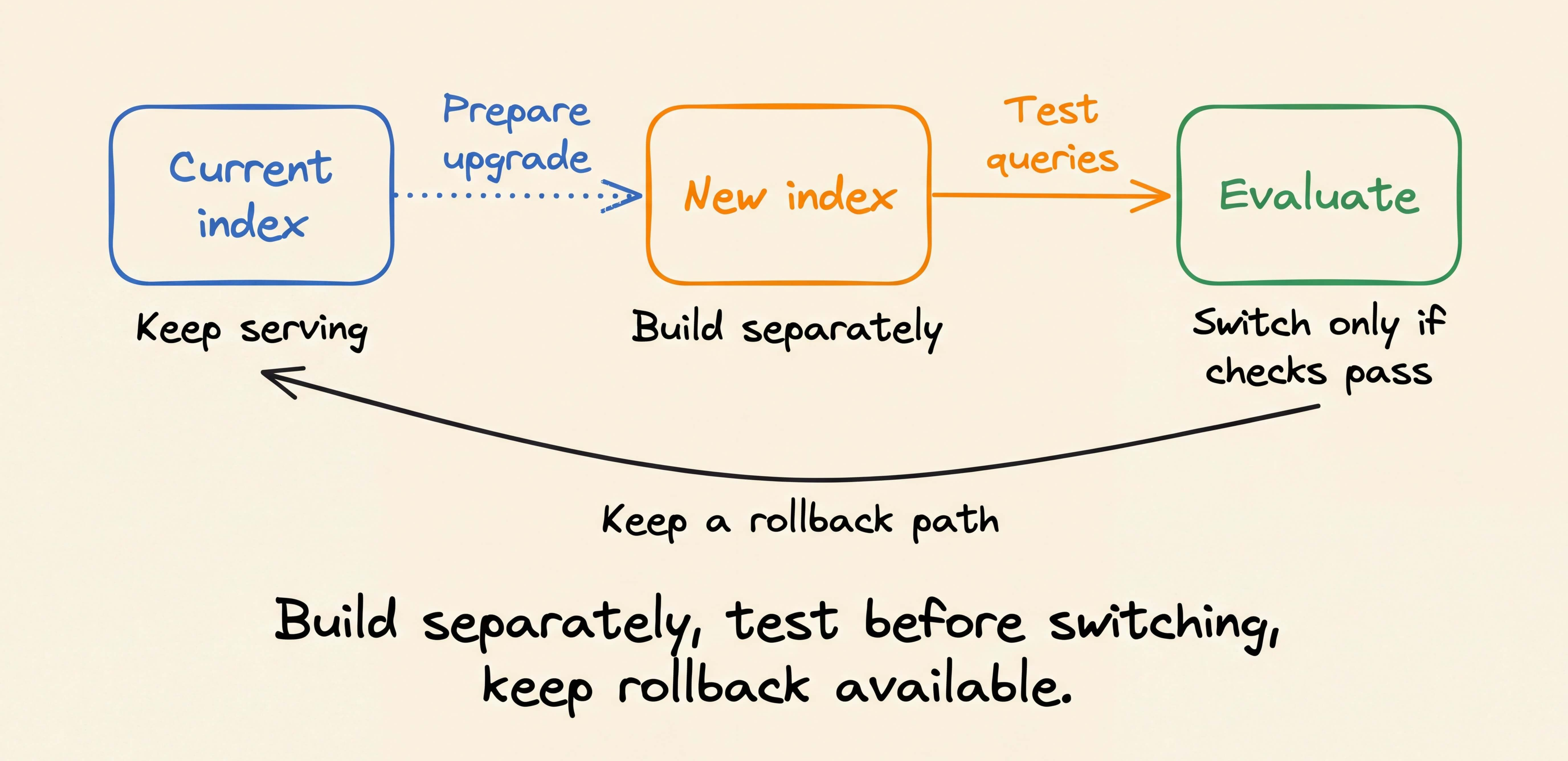
Part 20 develops the operational side of that work: data and model lineage, evaluation design, revision handling, migration gates, aliases, and rollback paths.
Part 21 adds the applied ML side: classifier evaluation, probability calibration, selective prediction, risk bounds, serving latency, and the trade-off between answer coverage and error rate.
These skills matter beyond one vector database or framework. They help you explain what failed, select the signal that can detect it, and deploy a fix without mixing incompatible vectors or serving unchecked claims.
The connection between the two parts is important. A verifier can confirm that an answer follows from its passages, but it cannot tell that those passages are outdated. Fresh retrieval and supported generation need separate controls.
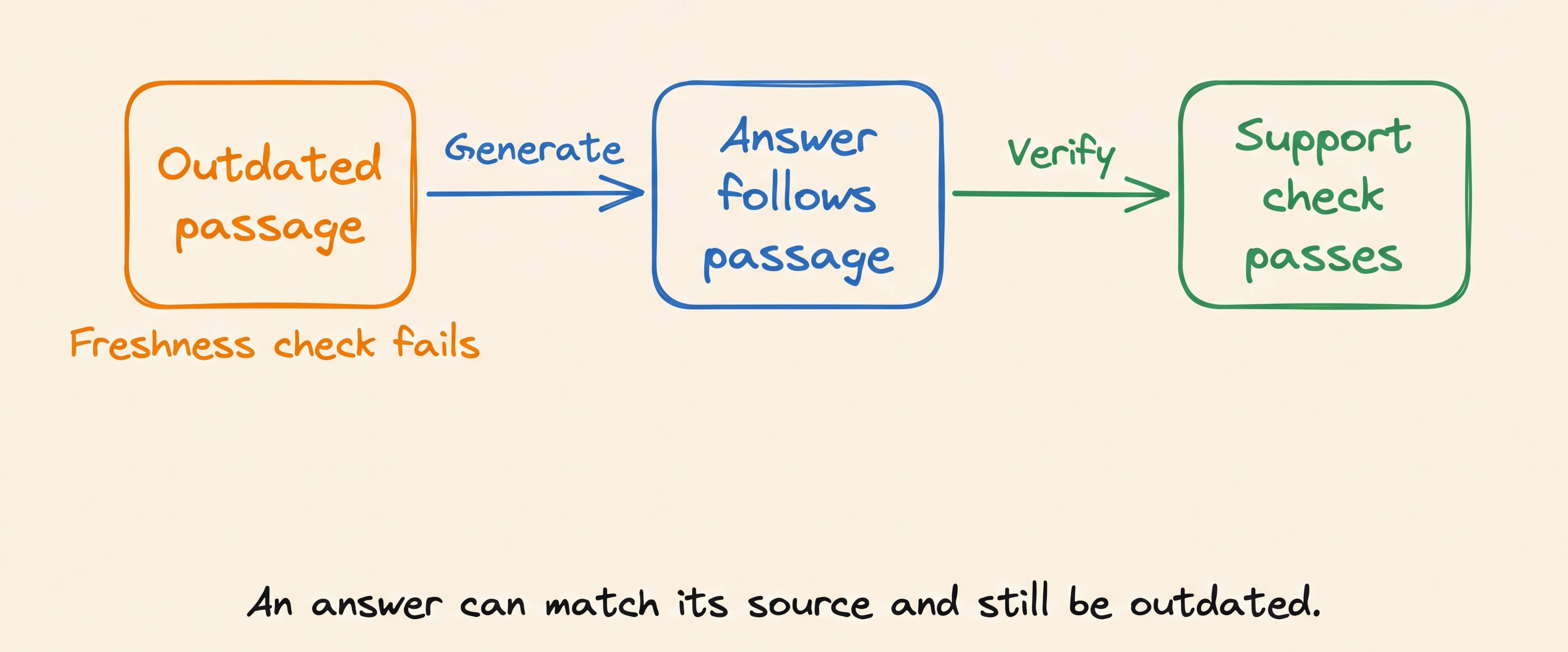
This is the progression from assembling RAG components to owning retrieval quality in production.
By the end of Part 21, you can design an index upgrade path, build evaluation data from document revisions, guard embedding spaces, compare verification models, and set an answer threshold against a stated error budget.
👉 Over to you: Which layer is harder to monitor in your RAG system, retrieval freshness or answer support?
Good day!