

An MCP server that detects production-grade code quality issues in real-time!
Even though AI is now generating code at light speed, the engineering bottleneck has just moved from writing to reviewing, and now devs spend 90% of their debugging time on AI-generated code.
SonarQube MCP Server solves this by producing enterprise-grade code analysis and returning instant feedback on bugs, vulnerabilities, and code smells right where you’re working (Claude Code, Cursor, etc.).
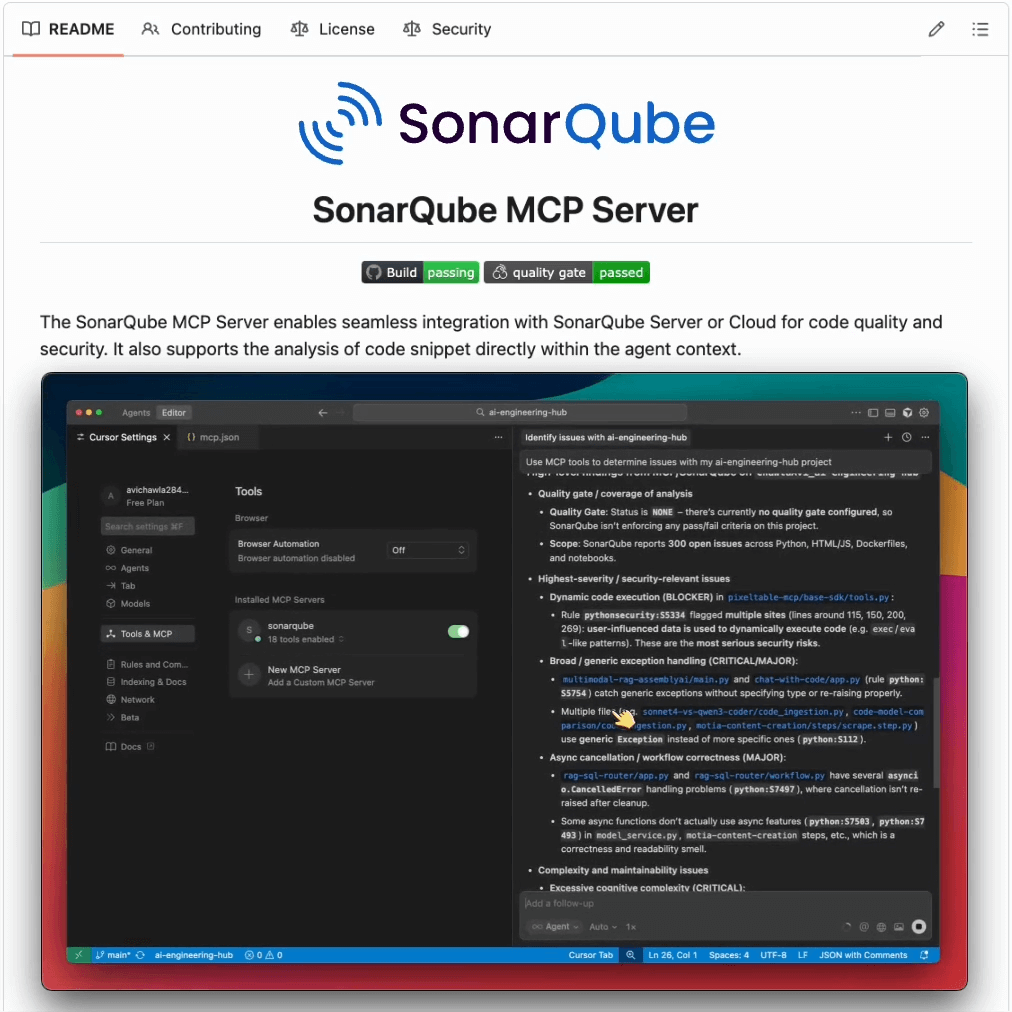
Its capabilities have emerged from the 750B+ lines of code SonarQube processes daily, so it has seen every bug pattern that exists.
This includes:
Security vulnerabilities (SQL injection, XSS, hardcoded secrets)
Code smells and technical debt
Test coverage gaps
Maintainability issues
The setup is simple:
Install the SonarQube MCP server
Add it to your AI assistant’s config
Done!
SonarQube is now part of your AI coding workflow.
You can find the GitHub repo here →
P.S. Thanks to Sonar for partnering today!
Supercharge Google’s MCP Toolbox with Unstructured Data Support
The MCP Toolbox from Google is great for structured data, since it gives you an open-source MCP server for databases.
The challenge is that most enterprise knowledge does not live in databases. It lives in emails, Slack, GitHub, Salesforce, customer reviews, internal files, and countless other sources that agents inside MCP Toolbox cannot see.
But much enterprise context exists beyond databases, like in emails, Slack, and GitHub, entirely invisible to MCP Toolbox agents.
To solve this, we used MindsDB to bring unstructured and semi-structured enterprise data into the MCP Toolbox workflow.
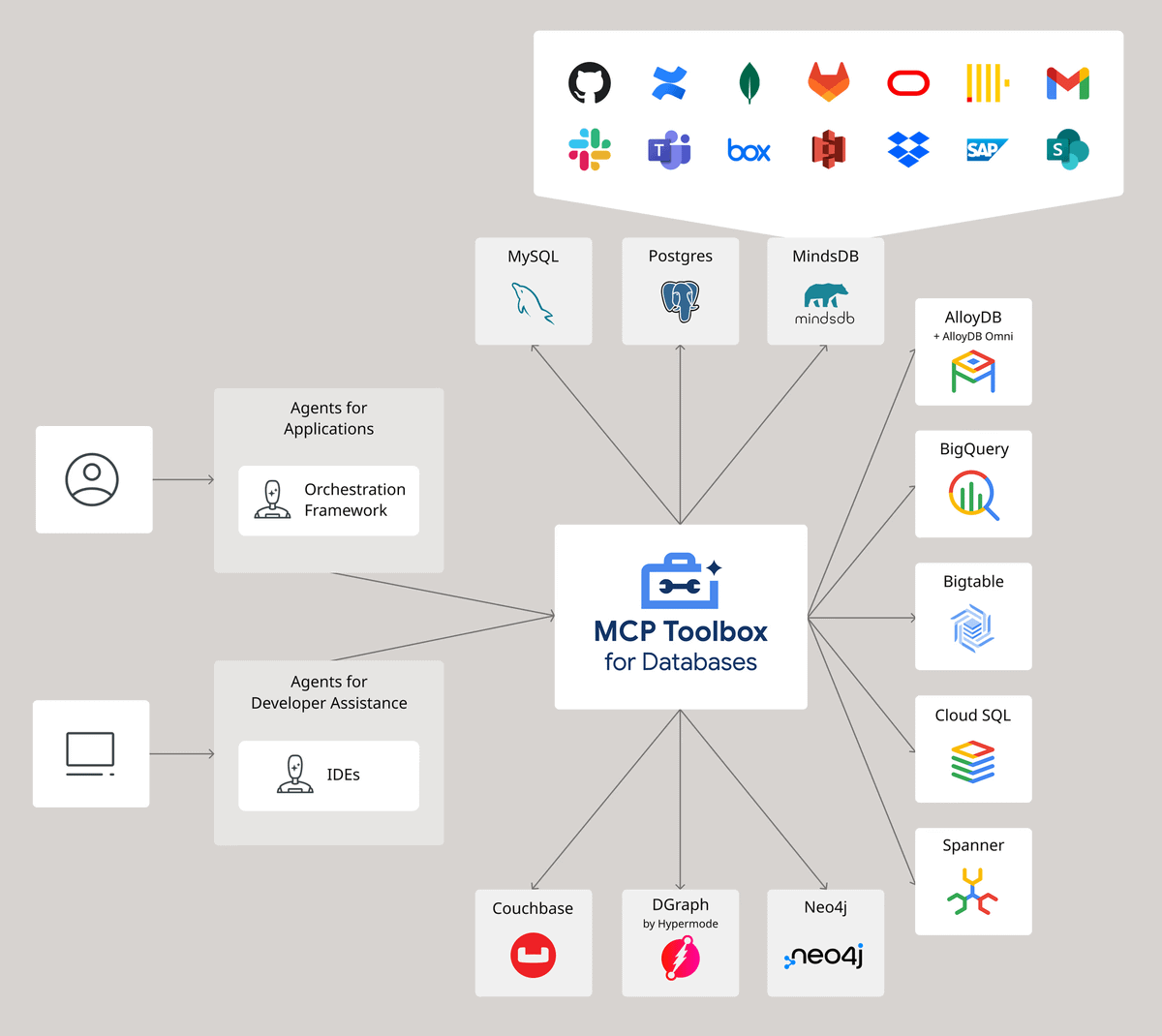
What once required ETL and weeks of engineering effort now happens with a single SQL query.
Here is the idea:
MindsDB acts as a universal SQL layer across structured, semi-structured, and unstructured sources. You can plug in Salesforce, Gmail, Jira, S3, GitHub, and more, then query all of them using the same SQL syntax.
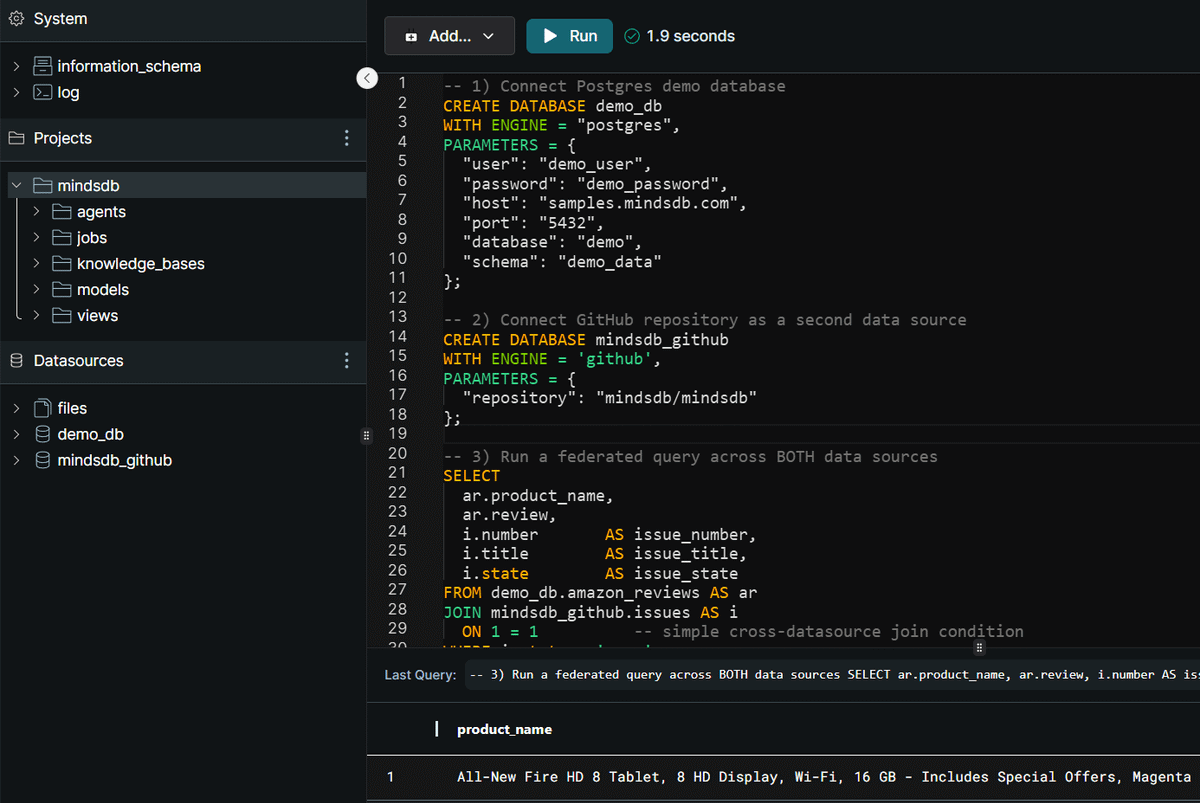
MCP Toolbox tools connect to MindsDB through MySQL, so from the agent’s point of view, it is simply running SQL and receiving context.
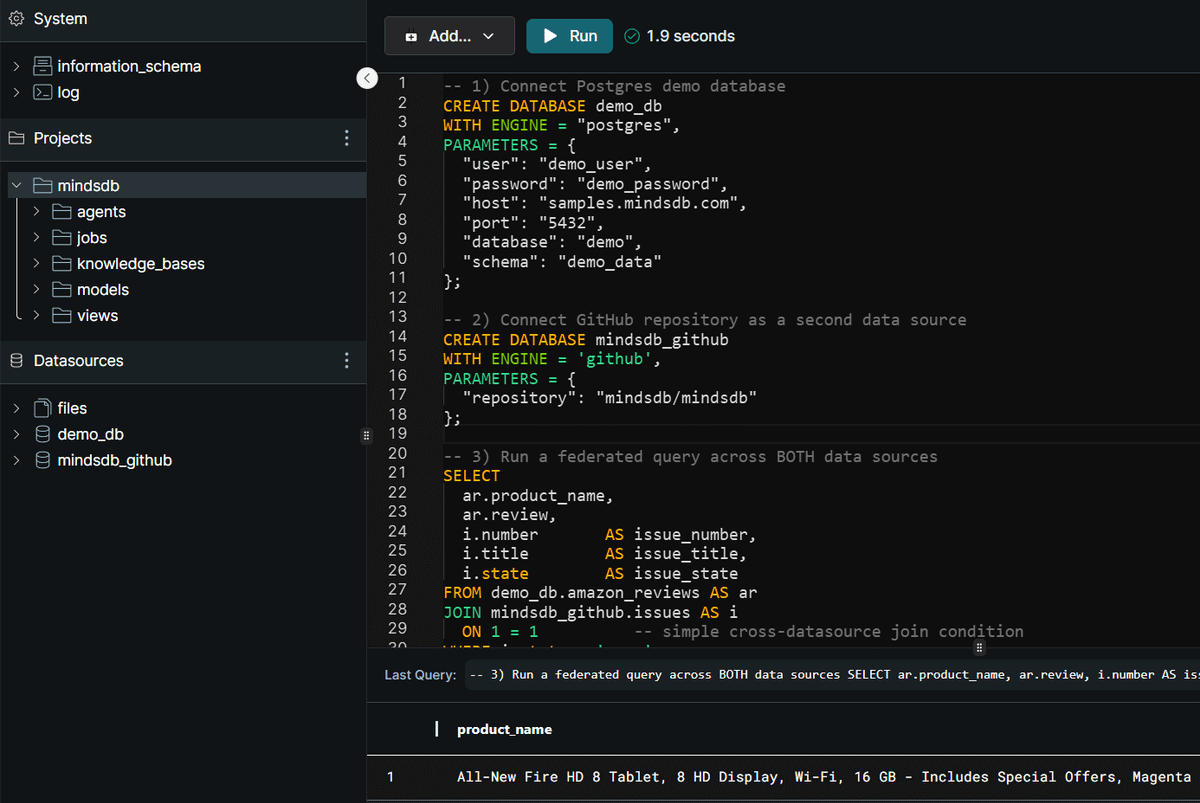
Inside the MCP Toolbox, each source becomes a table, and each table becomes usable context for the agent. Suddenly you get:
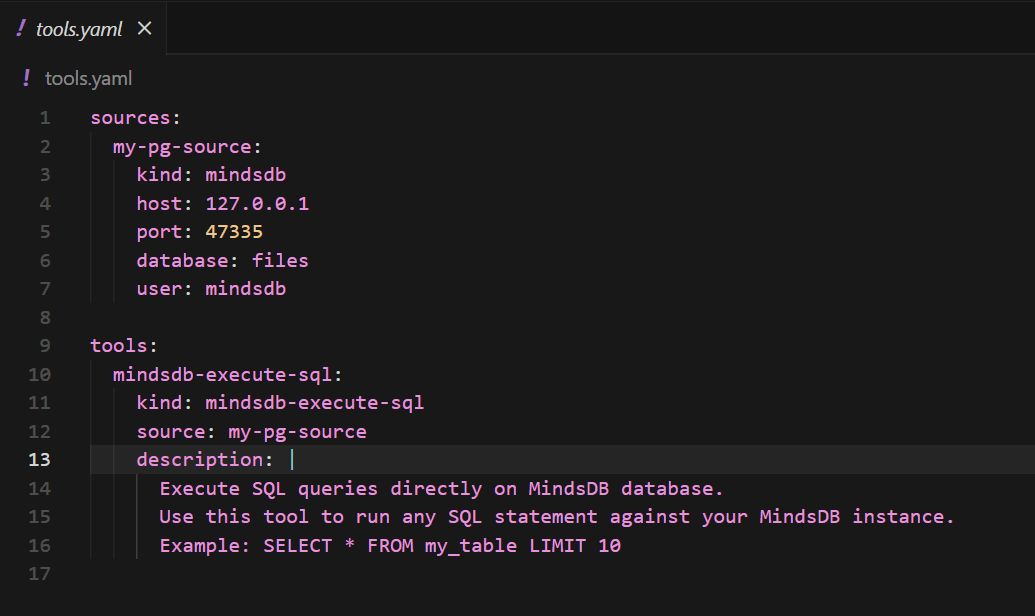
One SQL layer for multiple sources
Cross-datasource joins by default
Built-in ML and unstructured data capabilities
Simple MCP tools with expanded reach through MindsDB
With this setup, MCP Toolbox agents can pull live enterprise context, merge structured and unstructured information, reason over it in real time, and return grounded answers with citations.
For example, in the demo below, the agent queries GitHub data and a customer review database in a single SQL query.
The long-term success of AI agents depends on how much relevant data they can use, not only on model quality. This integration gives MCP agents the environment they need to access and understand real enterprise data.
You can get more info about the setup here →
You can find the MindsDB GitHub repo here →
Thanks for reading!