

Drag-and-drop UI to build AI agent workflows
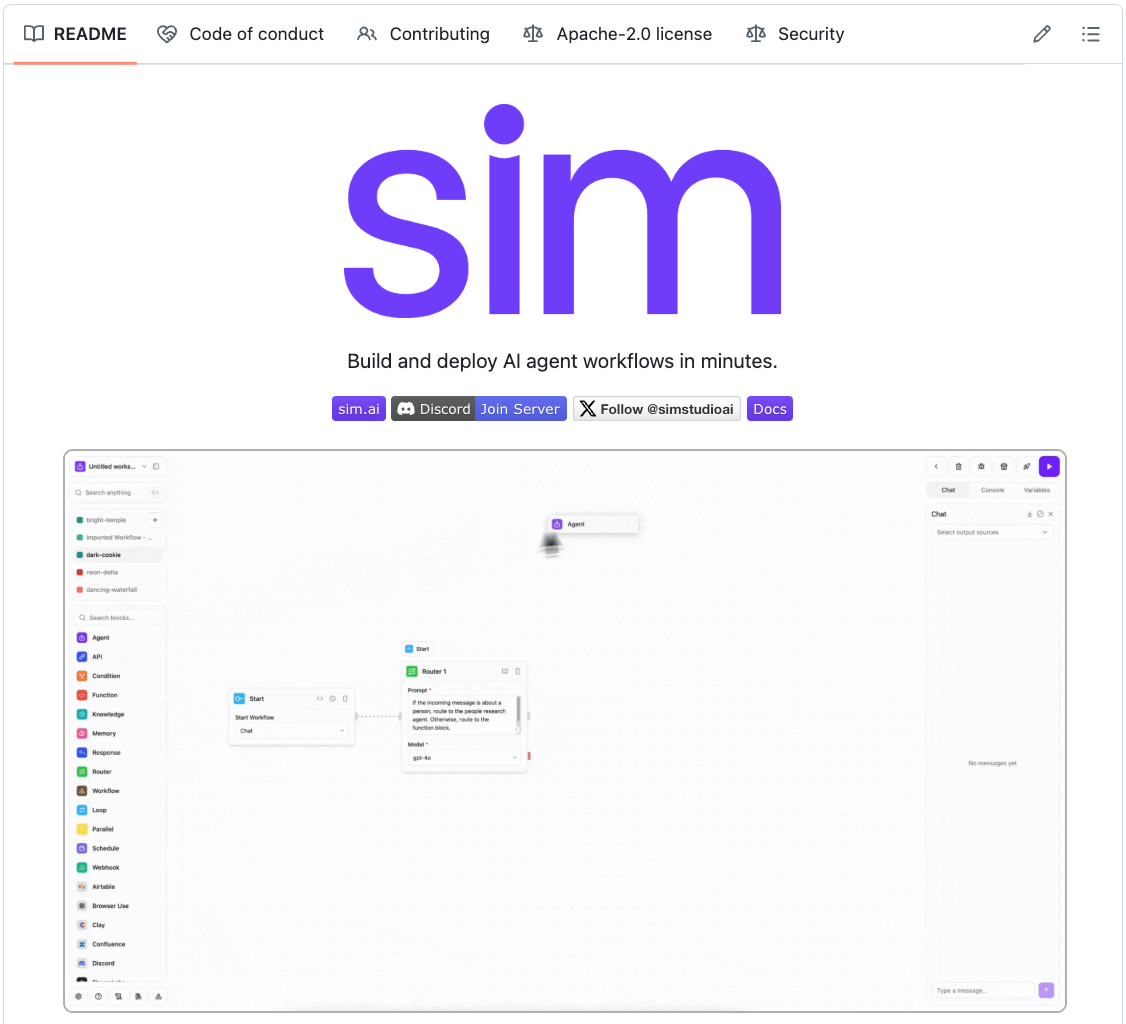
Sim is a lightweight, user-friendly platform for building AI agent workflows in minutes.
Key features:
Real-time workflow execution
Connects with your favorite tools
Works with local models via Ollama
Intuitive drag-and-drop interface using ReactFlow
Multiple deployment options (NPM, Docker, Dev Containers)
Based on our testing, Sim is a better alternative to n8n with:
An intuitive interface
A much better copilot for faster builds
AI-native workflows for intelligent agents
GitHub repo → (don’t forget to star)
The top Hermes integrations to give your agent superpowers
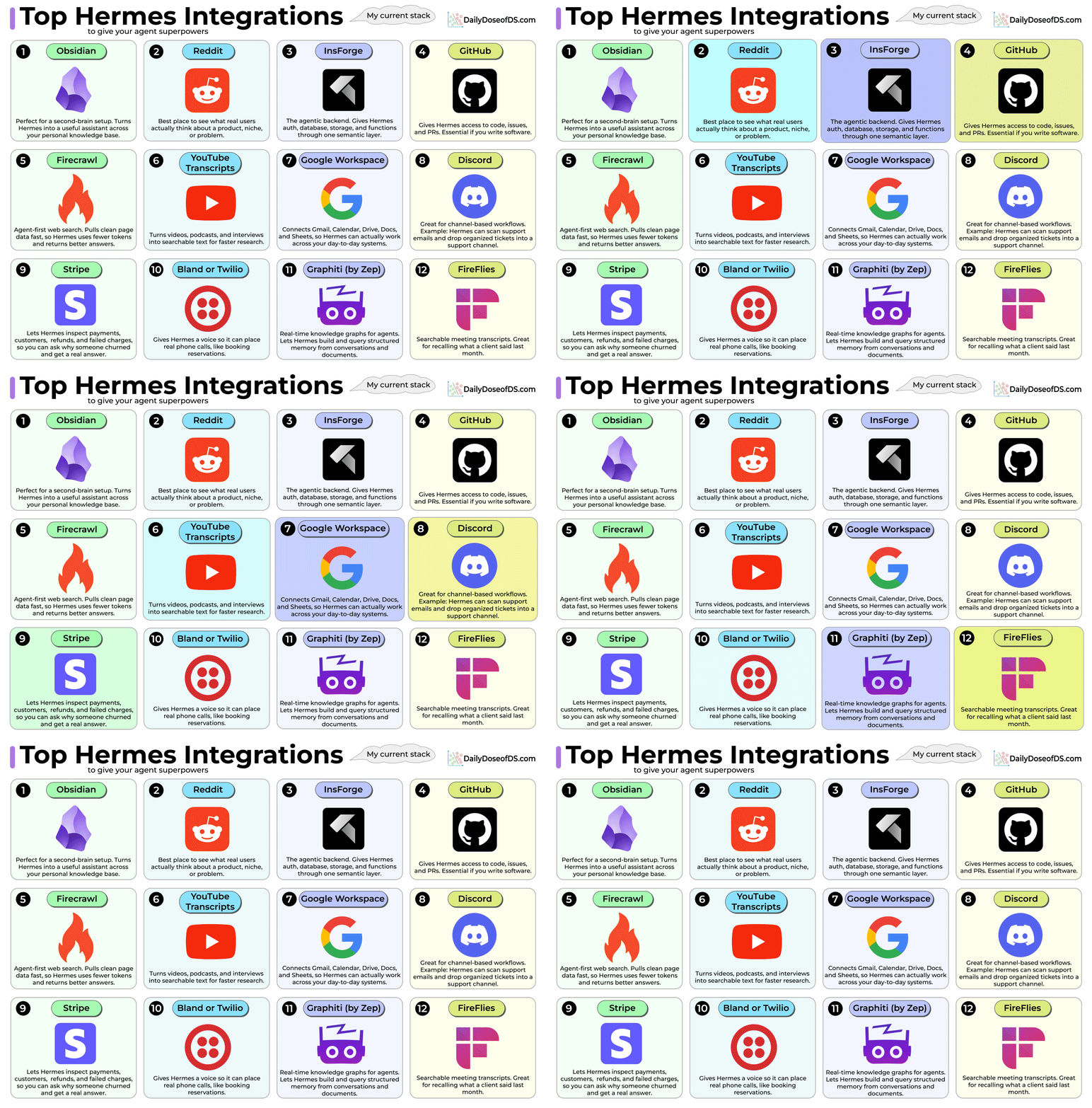
The top Hermes integrations to give your agent superpowers:
1. Obsidian
The Karpathy-style second brain, but one that talks back.
Every note, page, and backlink in the vault becomes live context. The agent doesn’t just store knowledge, it reasons over it across everything that’s been written and saved.
2. Reddit
Unfiltered opinions from real users on any product, niche, or problem.
No SEO fluff, no corporate blogs. Just raw signal from people who actually use the thing. One of the best research integrations for market validation.
3. InsForge
A full agentic backend behind one semantic layer.
Auth, database, storage, edge functions, all accessible without wiring five services together. The agent reasons about backend primitives directly instead of calling disconnected APIs.
Closest analogy: a PaaS built for agents.
(don’t forget to star 🌟)
4. GitHub
Code, issues, PRs. Turns Hermes into an engineering teammate that can actually read the repo.
Essential for anyone shipping software.
5. Firecrawl
Web search designed specifically for agents.
Returns clean structured data instead of raw HTML, which means faster responses and fewer tokens burned per query. Worth keeping on by default.
6. YouTube transcripts
Converts any video into searchable text. Hour-long podcasts, tutorials, conference talks, all become indexed notes in seconds.
Easily the most underrated research integration in the stack.
7. Google Workspace
Gmail, Calendar, Drive, Docs, and Sheets through one connector.
An agent that can’t check the inbox, read the calendar, or write to shared docs is basically decorative. This should probably be the first integration anyone enables.
8. Discord
Ideal for channel-based automation.
Hermes can be plugged into specific channels with dedicated workflows in each. Support tickets from email can be scanned, categorized, and dropped into an organized channel every morning without anyone lifting a finger.
9. Stripe
Revenue, refunds, subscription changes, failed charges, all surfaced through a single question instead of clicking through dashboards.
“How many trials converted last week” or “which customers downgraded this month” gets a direct answer. Turns Stripe from a payment processor into a queryable business intelligence layer.
10. Bland (or Twilio)
Gives Hermes a voice for real phone calls. Booking reservations, confirming appointments, following up on invoices.
The call recordings are worth listening to just for entertainment.
11. Graphiti (by Zep)
Real-time knowledge graphs that build structured relationships from conversations and documents.
Instead of flat vector similarity, the agent traverses typed connections between entities. The difference between “find similar text” and “understand how things actually relate.”
(don’t forget to star 🌟)
12. FireFlies
Every meeting transcript, fully searchable. “What did that client say about pricing last month” gets answered instantly instead of scrubbing through a 45-minute recording.
That said, if you’re looking to set up Hermes, I wrote a full deep dive covering the Hermes agent’s architecture, memory system, self-evolving skills, GEPA optimization, and how to set up multiple specialized agents.
Thanks for reading!